The Journey of Ecuadorian Flowers: From Farm to Global Markets
Ecuador is recognized worldwide for producing some of the highest-quality flowers, particularly roses. Thanks to its unique geographical location, favorable climate, and year-round growing conditions, Ecuador has become one of the leading flower exporters in the world. However, behind every bouquet delivered to a florist, wholesaler, or retailer lies a sophisticated logistics network designed to preserve freshness and quality.
In this article, we explore how flower export logistics from Ecuador work and the critical role that transportation, cold chain management, cargo consolidation, and international distribution play in connecting Ecuadorian growers with global markets.
Why Logistics Is Critical for Flower Exports
Flowers are highly perishable products that require precise handling throughout the supply chain. Even minor temperature fluctuations, delays, or improper storage conditions can significantly affect product quality and shelf life.
Effective flower logistics ensures:
- Maximum freshness upon arrival
- Reduced product losses
- Faster transit times
- Consistent quality standards
- Reliable delivery to international buyers
For exporters, logistics is not simply transportation—it is a strategic component of business success.
Step 1: Harvesting and Post-Harvest Processing
The export process begins at flower farms throughout Ecuador. After harvesting, flowers undergo grading, quality control inspections, hydration treatments, and packaging procedures.
During this stage:
- Flowers are sorted by variety, size, and quality.
- Stems are carefully prepared for export.
- Specialized packaging protects the product during transit.
- Temperature-controlled environments preserve freshness.
Proper post-harvest handling is essential for maintaining product quality throughout the export journey.
Step 2: Cold Chain Management
One of the most important aspects of flower export logistics is maintaining an uninterrupted cold chain.
Cold chain logistics involves keeping flowers at controlled temperatures from the moment they leave the farm until they reach the final customer.
Benefits include:
- Extended vase life
- Reduced dehydration
- Preservation of color and appearance
- Lower spoilage rates
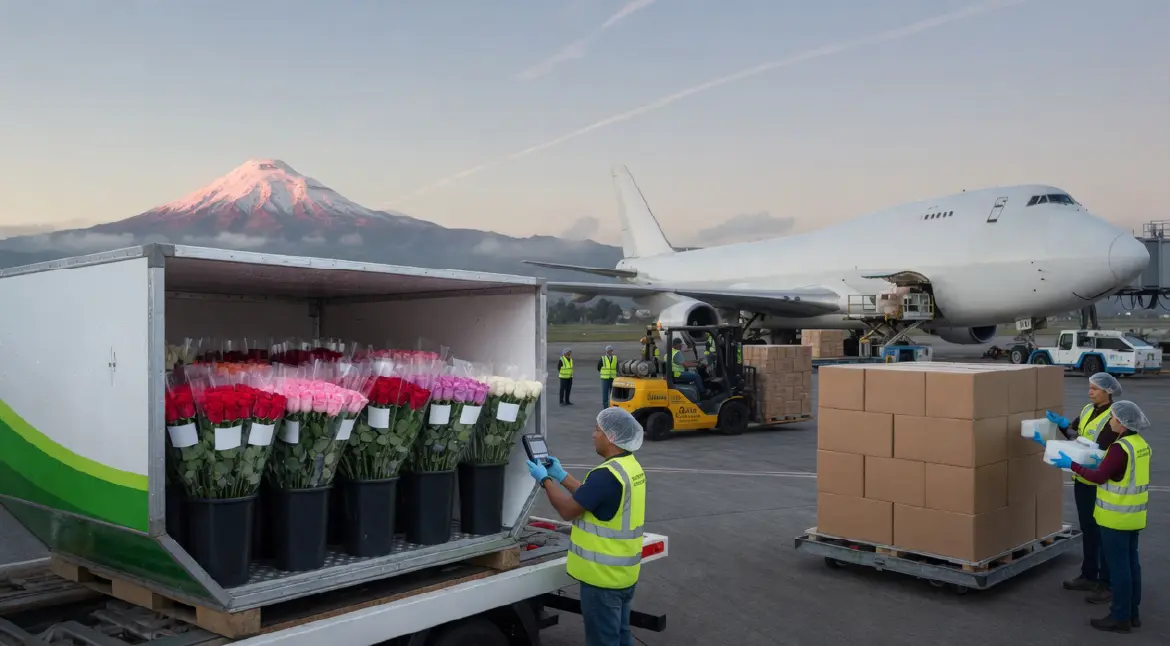
Professional logistics providers use refrigerated facilities, temperature-controlled vehicles, and specialized handling procedures to protect floral cargo.
Step 3: Cargo Consolidation
Many exporters rely on flower cargo consolidation services to improve efficiency and reduce transportation costs.
Cargo consolidation combines shipments from multiple growers into larger loads that can be transported more economically.
Advantages include:
- Lower freight costs
- Improved transportation efficiency
- Faster shipment coordination
- Better use of cargo capacity
Companies specializing in floral logistics often operate daily consolidations from key production regions such as Quito, Bogotá, and Medellín to international gateways like Miami.
Step 4: Air Freight Transportation
Because flowers are highly perishable, air freight remains the preferred transportation method for most international flower shipments.
Key benefits of air transportation include:
- Rapid delivery times
- Reduced transit risks
- Access to global markets
- Enhanced product freshness
Flowers are transported from Ecuador’s airports to major distribution hubs worldwide, ensuring timely arrival for wholesalers, distributors, and retailers.
Step 5: Customs Clearance and Documentation
International flower exports require strict compliance with import and export regulations.
Export documentation typically includes:
- Commercial invoices
- Packing lists
- Airway bills
- Phytosanitary certificates
- Customs declarations
Experienced logistics providers manage these requirements efficiently, minimizing delays and ensuring smooth customs clearance.
Step 6: Distribution in Destination Markets
Once flowers arrive in destination countries, logistics operations continue through warehousing, cargo handling, and final distribution.
At this stage, flowers are delivered to:
- Importers
- Floral wholesalers
- Retail chains
- Florists
- Event suppliers
Maintaining cold chain integrity remains essential until the product reaches its final destination.
The Role of Specialized Floral Logistics Companies
Unlike traditional freight operators, specialized floral logistics providers understand the unique requirements of perishable flower cargo.
These companies offer:
- Temperature-controlled transportation
- Flower cargo consolidation
- Warehousing and storage
- Customs coordination
- Door-to-door logistics solutions
- Supply chain visibility
Their expertise helps exporters maintain quality standards while reaching international markets efficiently.
Ecuador’s Competitive Advantage in Global Flower Exports
Ecuador continues to be a leading supplier of premium flowers thanks to:
- Ideal growing conditions
- Year-round production
- High-quality varieties
- Strategic access to international transportation networks
- Strong logistics infrastructure
Combined with specialized export logistics services, Ecuadorian flower growers can successfully compete in demanding global markets.
Conclusion
The success of Ecuador’s flower industry depends on much more than cultivation. Behind every export shipment is a carefully coordinated logistics operation involving cold chain management, cargo consolidation, air freight transportation, customs compliance, and international distribution.
As global demand for fresh flowers continues to grow, reliable flower export logistics, cold chain solutions, and international transportation services remain essential for connecting Ecuadorian growers with customers around the world.